Textiles Industry & Yarn Manufacturing Factory Flooring
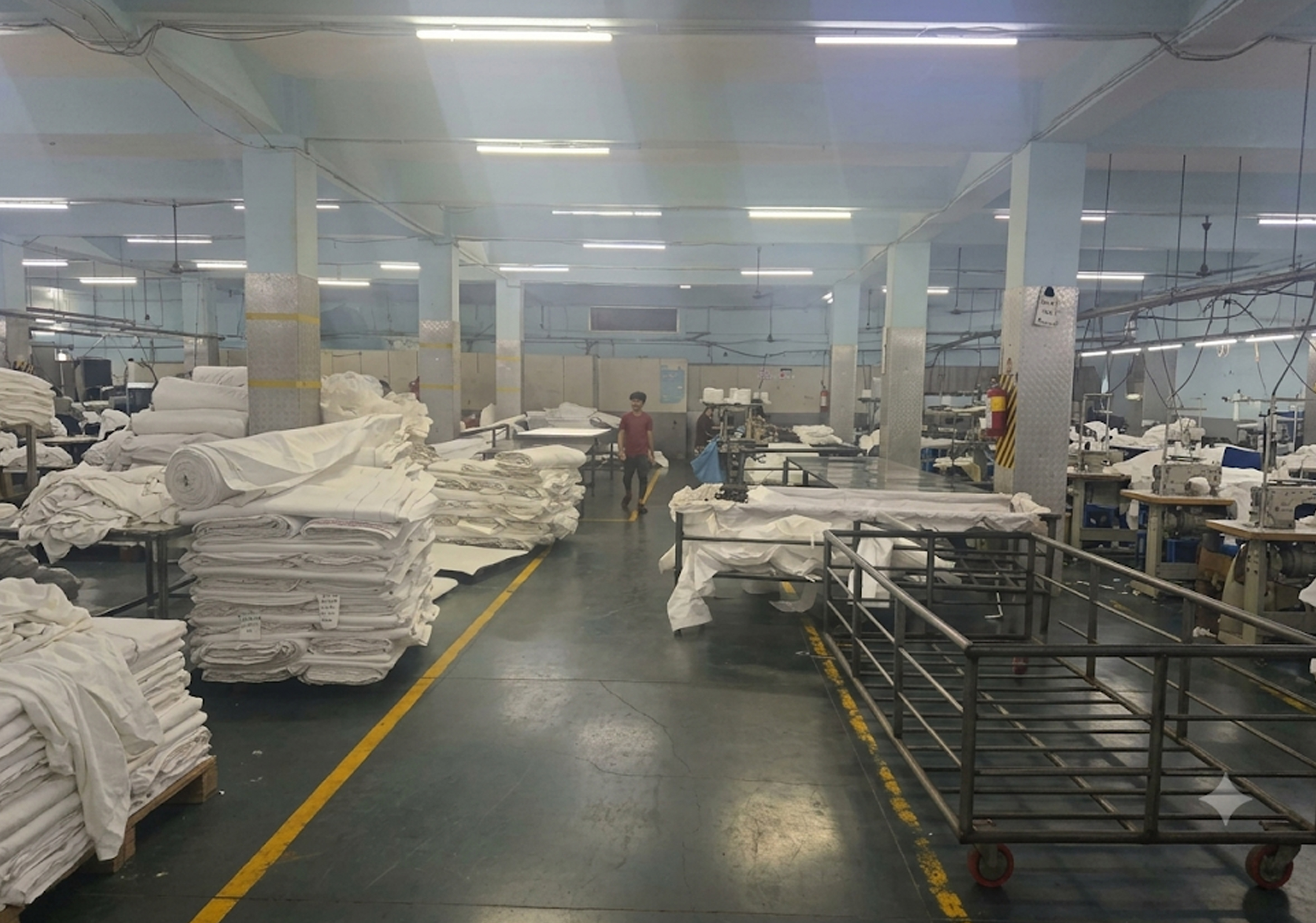
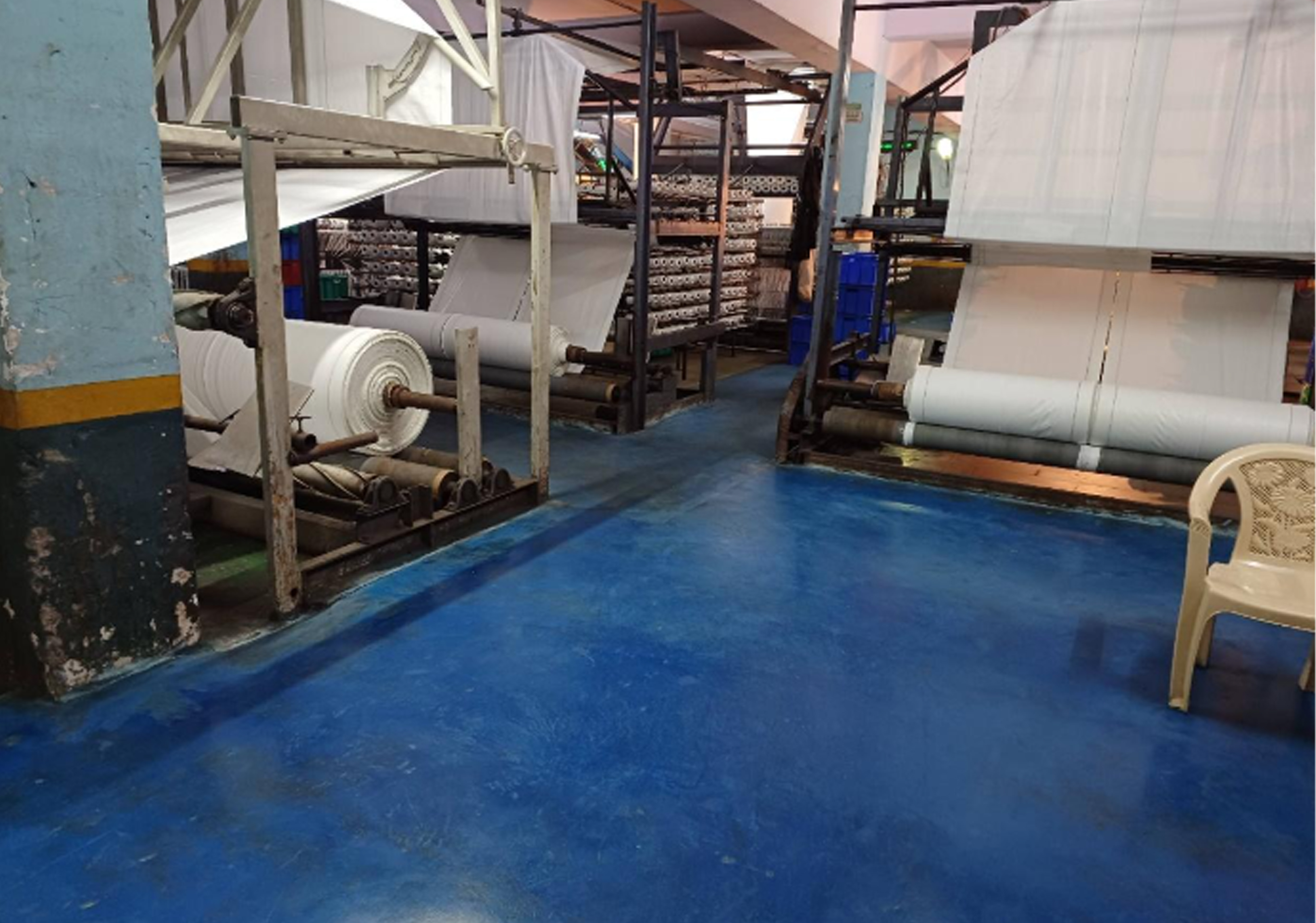
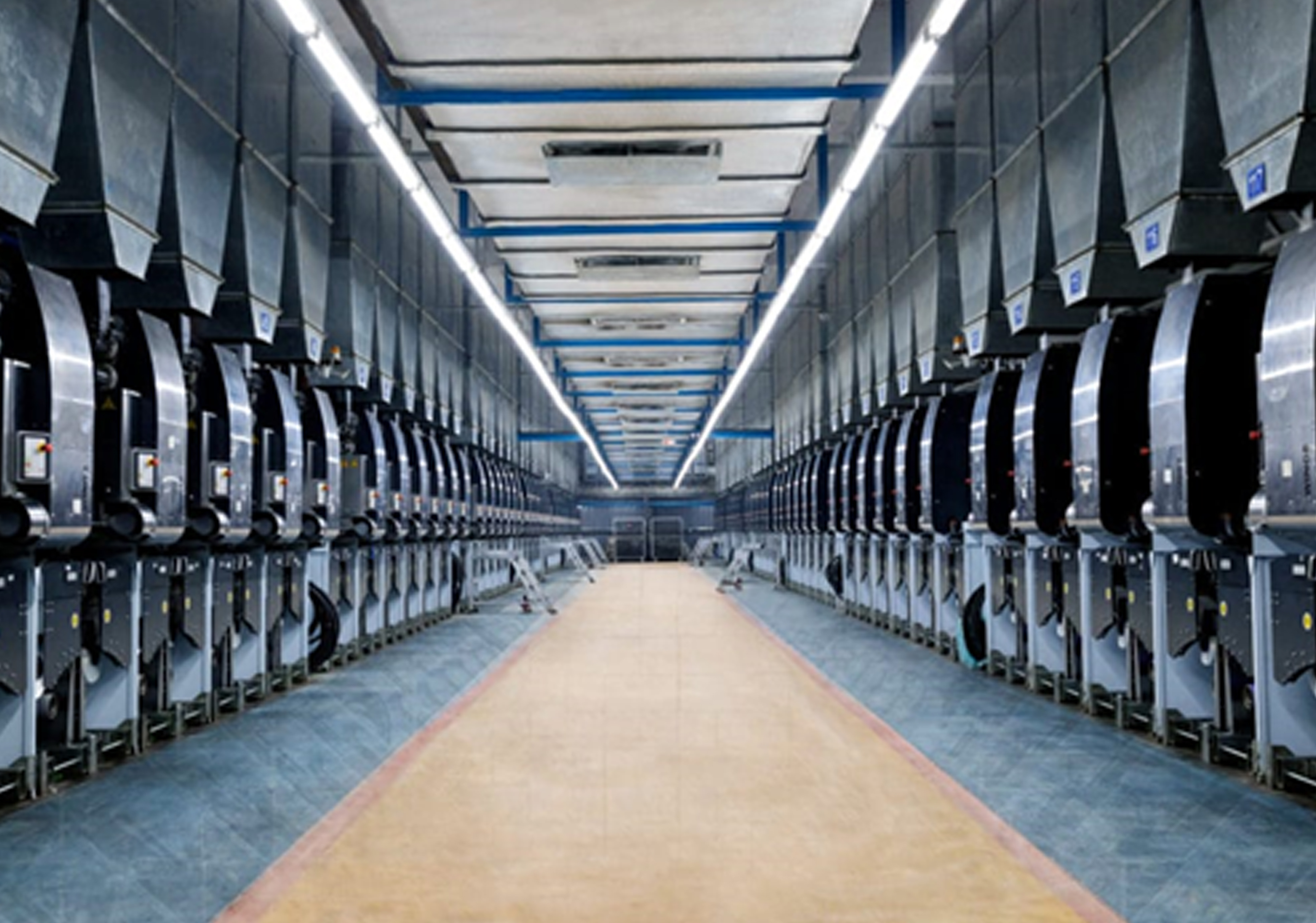
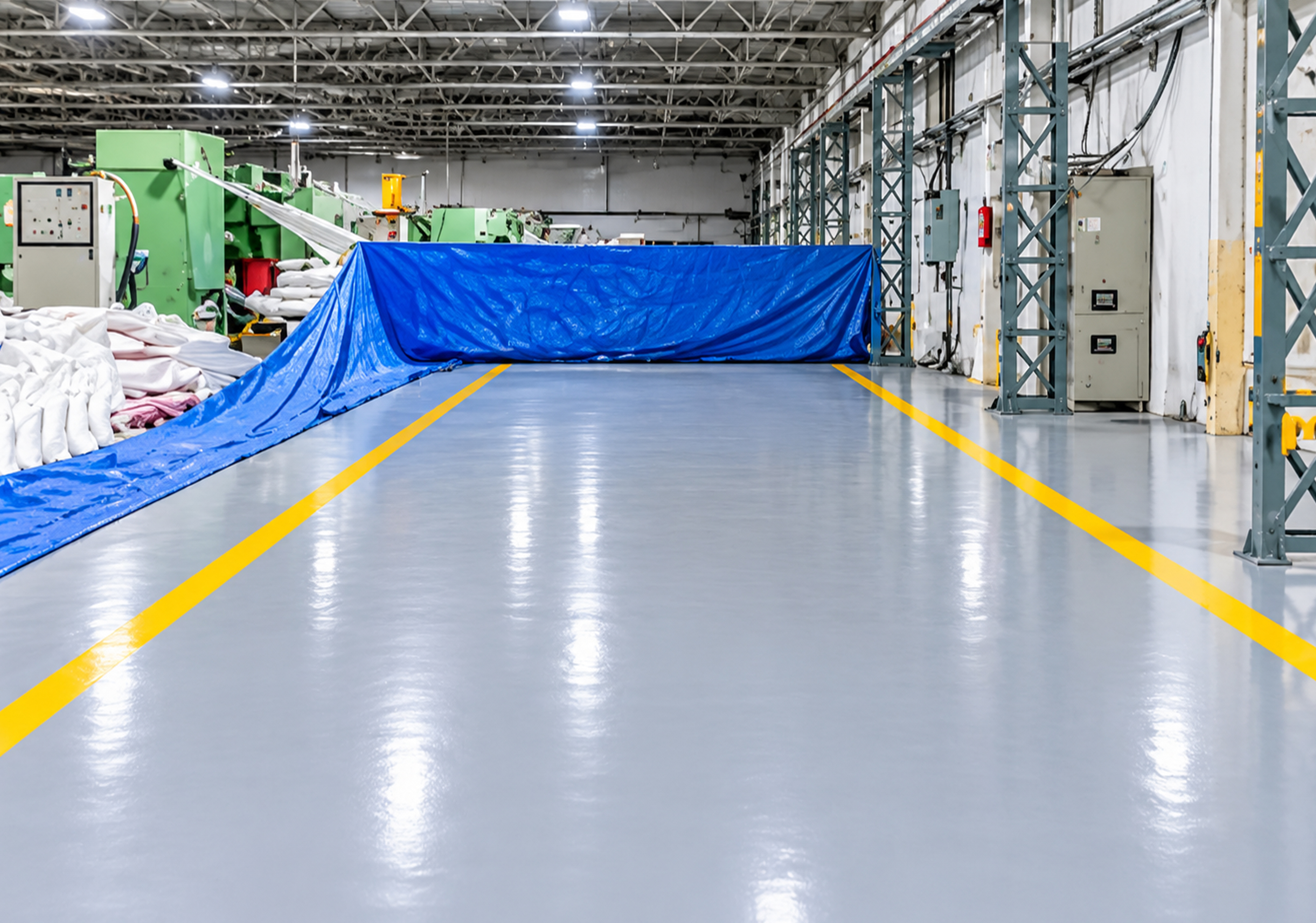
Dust-proof, seamless, heavy-duty floors for spinning, weaving, processing and yarn storage areas.
A textile mill is tough on floors. Machinery vibrates all day, trolleys carry yarn cones and fabric rolls, lubricants drip, and wet processing areas stay damp. Conventional cement floors and tiles crack, dust and wear out under this load. Chemoxy Floorings, a Industrial and Warehouse Flooring Contractor in India, offers monolithic floor systems for textile and yarn manufacturing units. We recommend the right system for each section of your plant, because floor performance and durability matter more than looks.
Common Floor Problems in Textile and Yarn Units :
-
Dust generation from cement floors, which settles on machines, yarn and fabric
-
Oil and grease spillage from machinery and lubrication points
-
Vibration and mechanical shock from spinning frames, looms and other heavy equipment
-
Trolley, forklift and stacker movement carrying bobbins, beams, cones and bales
-
Water and moisture in dyeing, sizing, washing and wet finishing areas
-
Cracks and open expansion joints that collect lint and dirt
-
Slippery surfaces in oily or wet zones
-
Termites and rats in storage areas
-
Long curing times that hold up production
Chemoxy floors are built to handle these problems.
Our Two Core Systems for Textile Plants :
Chemoxy OSR: Oil & Solvent Resistant Flooring :
Chemoxy OSR is a heavy-duty, monolithic floor that acts as a barrier against oil, grease and solvents. Spills don't soak into the substrate, and clean-up is simple.
Key benefits :
-
Dust-proof : does not generate dust, so the workspace stays cleaner
-
Seamless and jointless : fewer cracks and weak spots to trap lint and dirt
-
Oil, grease and solvent resistance : protects the floor and the substrate around machinery
-
Shock resilient : absorbs mechanical vibration from heavy machinery
-
High load-bearing capacity : suited to trolley, forklift and stacker movement
-
Anti-skid and fire resistant : for a safer work environment
-
Termite and rat proof : protects yarn godowns and storage areas
-
Quick curing : sets within 24 hours, so production restarts sooner
-
Versatile : suitable over concrete, metal and wooden surfaces
Ideal for : spinning and winding sections, weaving sheds, machine and engineering areas, yarn and fabric godowns, packing and dispatch areas.
Please note : Chemoxy OSR is not recommended for continuous wet areas. For wet operations, choose Chemoxy WR.
Chemoxy WR: Water Resistant Flooring :
Chemoxy WR is made with an advanced polymer-based cement binder. It is a non-shrink, flowable system that gives a strong, water-resistant, seamless floor for wet and dry operations.
Key benefits for textile units :
-
High water resistance : repels water and prevents moisture penetration
-
Compressive strength of 500 kg/cm² after 28 days, suitable for medium to heavy traffic
-
Dust-proof and low maintenance
-
Handles trolley and forklift movement in wet and dry areas
-
PU/epoxy compatible : can be top coated for extra durability and finish
-
Custom thickness and finishes to suit your requirement
Ideal for : dyeing and processing houses, sizing and washing areas, wet finishing sections, heavy-traffic zones, wet and dry areas across the plant.
Technical Specification :
| Property | Chemoxy WR |
|---|---|
| Compressive strength | 500 kg/cm² (28 days) |
| Minimum thickness | 25 mm |
| Foot traffic | Ready after 72 hours |
| Topcoat | PU / epoxy compatible |
Which System Should You Choose?
| Plant Area | Typical Challenge | Recommended System |
|---|---|---|
| Spinning, carding and winding | Dust, vibration, oil from machinery | Chemoxy OSR |
| Weaving shed | Heavy vibration, oil, trolley movement | Chemoxy OSR |
| Dyeing, sizing and wet processing | Constant water and moisture | Chemoxy WR |
| Washing and wet finishing | Wet operations, slip risk | Chemoxy WR |
| Yarn and fabric godowns | Forklift traffic, dust, pests | Chemoxy OSR (or WR if moisture exposure is high) |
| Packing and dispatch | Trolley and forklift movement | Chemoxy OSR |
Why Textile and Yarn Units Choose Seamless Flooring :
-
Cleaner production floors : a dust-proof, jointless surface leaves fewer places for lint and dirt to collect
-
Machine-friendly : shock resilience helps the floor handle vibration from heavy equipment
-
Smooth material movement : a strong, level surface suits trolleys, forklifts and stackers
-
Safer workplace : anti-skid properties, plus fire resistance in OSR
-
Lower maintenance : easier cleaning and fewer repairs than conventional cement floors and tiles
-
Less downtime : OSR cures within 24 hours, and WR takes foot traffic after 72 hours
How Chemoxy WR Is Installed :
-
Clean the surface remove debris, oil, grease and dirt
-
Apply a polymer bonding layer to secure the new floor to the substrate
-
Spread the mortar evenly at a minimum 25 mm thickness
-
Finish by manual or mechanical troweling, then topcoat with PU/epoxy if required
Why Choose Chemoxy Floorings?
-
Years of experience in industrial flooring
-
Custom solutions for your application and plant layout
-
A range that includes OSR, WR, epoxy/PU coatings and fire-resistant flooring
-
Trusted by clients across industries in India, and exports worldwide
-
Fast installation to minimise downtime
Industries We Serve :
-
Textile mills
-
Spinning and yarn manufacturing units
-
Weaving and processing units
-
Garment and apparel factories
-
Warehouses and logistic
-
Printing and packaging
-
Engineering and pharmaceutical units
Frequently Asked Questions?
Q1 : What is the best flooring for a textile mill or yarn factory?
Q2 : What is the difference between Chemoxy OSR and Chemoxy WR?
Q3 : Can these floors handle trolley and forklift traffic in a yarn godown?
Q4 : Which flooring is right for dyeing and wet processing areas?
Q5: How soon can the floor be used?
Q6: What is the minimum thickness for Chemoxy WR?
Get the Right Floor for Your Textile Plant :
Tell us about your mill or yarn unit and we'll recommend the right system for each section.
